
Interview
The CCC Journey: Documenting a Legacy of Family, Trust and Empathy
To CCC’s Chairman Samer Khoury, “The CCC Family: A Legacy of Value” – a book conceived by his late father Said Khoury and uncle Hasib Sabbagh – is a touchstone for the values and principles that guide the company, as well as its partners and shareholders, many of whom are now part of the family’s third generation. Unlike archival projects that focus strictly on historical context, the Khoury family’s book also provides a psychological perspective that elucidates the culture behind CCC’s key strategies.
Interview with Samer Khoury

The most enduring family legacies are defined by a commitment to shared values. At CCC, this legacy is embodied in its vast infrastructure and documented in story.
What began as a small operation in 1952 in Lebanon by Said Khoury and Hasib Sabbagh – two family members displaced from their home in Palestine by the Nakba in 1948 – has grown into one of the Middle East’s largest contractors. With infrastructure ranging from 23,000 km of pipelines to landmark buildings, and over $300 billion in global projects, CCC’s identity is defined by far more than its business accomplishments. Its foundation lies in a multigenerational family legacy built from indelible core values, trust, humility, transparency, and genuine care for all stakeholders as well as every other person who shares its mission.
Q: Could you share the story behind CCC’s founding?
Due to the 1948 war, my father, Said Khoury, and his brother-in-law and cousin, Hasib Sabbagh, had to leave the construction company they founded in Haifa, Palestine. They eventually settled in Lebanon, where they launched CCC (Consolidated Contractors Company) in 1952.
Initially, they worked on small projects in Lebanon until a key opportunity arose: building the BP (British Petroleum) pipeline from Iraq to Syria. My father and Uncle Hasib were asked to supply manpower for the extensive project by BP and the engineering firm involved, Bechtel. At the time, many engineers, foremen, and workers from Lebanon and Palestine were seeking work and looking for new opportunities. This enabled CCC to flourish.
Four years later, BP and Bechtel approached CCC to help build the Aden Refinery in Yemen. Another pipeline in Libya would follow, then a major project in Saudi Arabia. These opportunities transformed CCC from a very small company into one of the largest contractors in the Middle East.
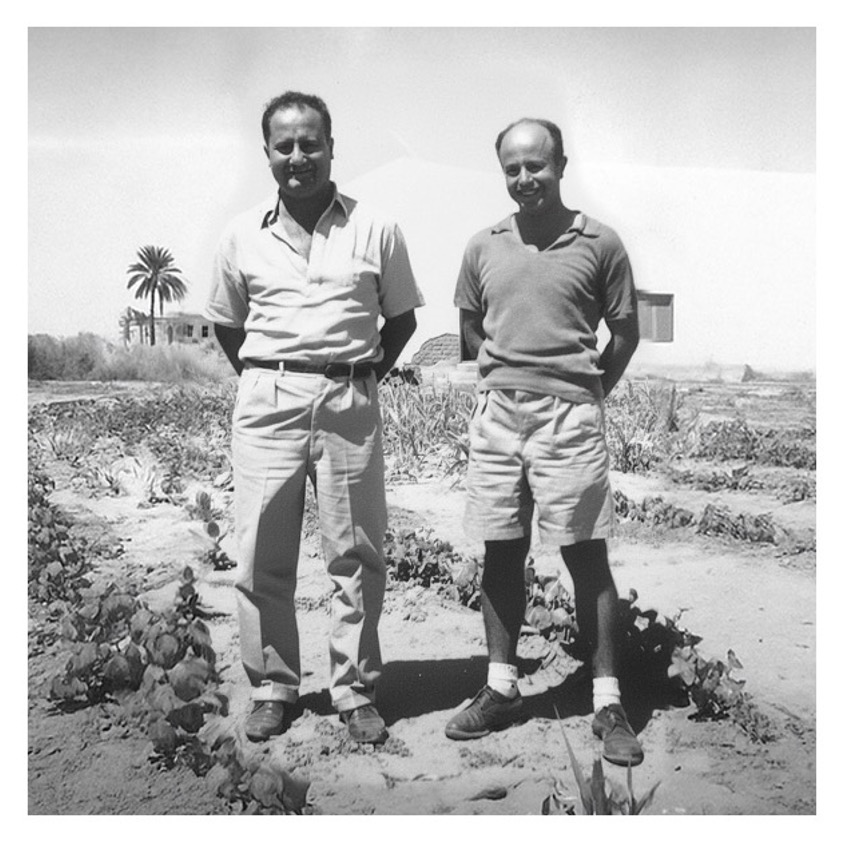
From left to right: Said Khoury and Hasib Sabbagh in Aden, 1950s.
Source: Consolidated Contractors Company (CCC)
Q: The founding years of CCC were also an interesting story of collaboration, partnership and resilience. What were key values that the company was established on that continue to be passed down through the generations?
The most important value has always been trust. My father and uncle both trusted each other implicitly to make decisions in the best interest of the company, rather than themselves. Intentions aren’t always obvious, but I believe family businesses can encounter trouble when people judge the actions of their family members too hastily. A measure of trust that everyone is working in the best interests of the firm is essential, especially as next-generation ownership grows, as it has with us.
We’ve expanded from the original two owners to around 20 among multiple generations. Admittedly, it is very challenging to maintain the same level of trust with so many stakeholders. Yet there remains a closeness, respect, and adherence to the values of the company and the family. We have a culture based on caring for each other – not just the shareholders, but all company members. We have learnt from our founders that it is important to be able to put yourself in someone else’s shoes – whether it’s a client or an engineer. That is why, despite our size, we will always consider CCC a family business.
And, contracting is largely a people’s game. It’s about negotiating with clients, subcontractors, and workers, and motivating your team. In my opinion, one of the most important traits in our business is not the CV you have, but the emotional intelligence you possess. You must be able to read between the lines and draw on your intuition to guide you, especially when dealing with individuals and companies that may try to take advantage.
Q: Your father spearheaded the effort to document your family’s journey with CCC after the company’s 40-year milestone. In 1998, your family published the book “The CCC Family: A Legacy of Value” in English and Arabic. How was the project developed?
My father believed that understanding the psychology of people is crucial for any company’s, or family’s, success. He wanted to share the culture and principles that had shaped CCC, telling me that he would take a full year to meet all the executives and explore the different areas in which the company operates.
His goal was to create something that clearly communicated why CCC is different from other companies – a book that was both illuminating and compelling, so that future leaders could maintain the same values, principles, and culture.
Author Christina Hantel-Fraser was an academic with specialization in organizational psychology and the wife of the Canadian Ambassador in Athens at the time. She took on the task of researching our family and company for the book. She traveled to the places that had influenced my father and uncle, including Palestine, where she visited their birthplace and spent time in their home village, which now is Israel. She learned about the patriarchal family structure that had been ingrained in them: the patriarch cares for everyone, not just for his children but the entire family.
My uncle’s family worked in agriculture and, like us, they had a large family who figured out how to work together while managing individual responsibilities. The cooperation, trust, and family dynamic that were foundational to my father and uncle growing up live on in today’s CCC. They are reflected in our employees, many of whom have been with us for 20, 30, or more than 40 years. They stay because we represent something more than simply a paycheck – they know they are part of our family.
Christina documented her findings and consulted with us on each chapter, and after two and a half years, it was complete. We now give it to all our senior employees to help reinforce that, while we are a company, we are also a family. We also share the book with clients and partners for the same reason.
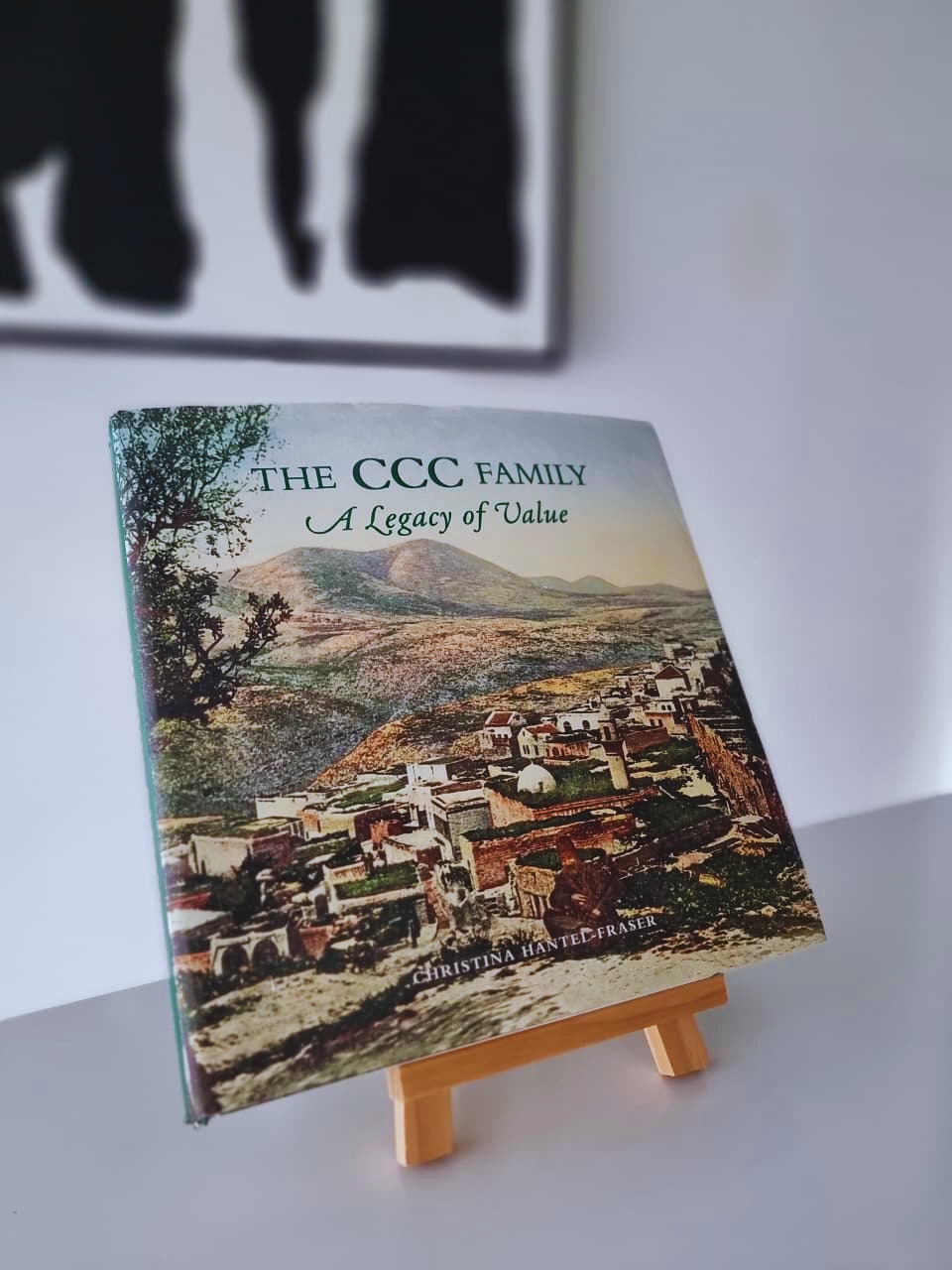
Book Cover: The CCC Family: A Legacy of Value, published by Consolidated Contractors Company (CCC) in 1998.
Photo Credit: Family Business Histories
Q: It is interesting to see that the book is as much a psychological reflection on the values driving the family, as well as a historic documentation of its growth. Does the book play an active role within the family today?
We are a very close family who meets often, so the book doesn’t directly impact our regular activities. Its guidance is more outward-facing, impacting our external circles. However, the values it underscores remain central to our family. Our current third generation has been raised with those values, just as the generations before them.
Often, these kinds of projects focus only on historical events. Our decision to also include the psychological perspective offers the full story of who we are and how we got here.
Having those two complementary points of view initiated from the founder presents a clear methodology of how our family initially put its principles into practice and continues to do so now.
Over the years, many people have joined CCC who were not aligned with our values. Those individuals eventually leave because our system is designed to reject those who do not mesh with our culture.
Q: Your family seems to actively engage new generations with the family’s legacy and its values. Do you have any advice for large, multigenerational families who might face similar experiences to yours? How can they sustain legacies throughout generations?
First, I believe a flexible exit strategy is essential. Families often grow larger than the business, and if someone wants to leave, there should be a mechanism allowing them to do so without undue complications to their life, while still receiving their fair share. However, those who remain shouldn’t be penalized by another family member’s exit. That’s why a structured agreement is key.
Second – and this is something we actively impress upon our third generation – is entrepreneurship. You can’t run a family company by waiting for things to happen. You must always be innovating and looking for the next big opportunity. Don’t maintain the same course simply because it’s what your elders did. You must innovate, or the competition will devour you. That also means staying politically and geopolitically alert, especially in the Middle East.
Finally, ensure you maintain balance between the family and the business. Often, choosing the family over a business outcome is the right decision to preserve unity. Ultimately, family unity serves the business. Unlike in corporations, where all strategies are measured against shareholder interests, sometimes family harmony is the most valuable strategy of all in a family business – and that is exactly where emotional intelligence and psychology come into play.

Consolidated Contractors Company (CCC) Headquarters in Athens, Greece.
Source: Consolidated Contractors Company (CCC)
Q: And following your experience with “The CCC Family: A Legacy of Value”, what would you like families to know who wish to embark on a project to document their history?
It’s extremely important for families to have a platform for recording their history. Not every member of our third generation had the chance to meet my father or my uncle, and none of our fourth generation did. However, through our book and a one-hour video my father created to introduce himself to future generations, the values that sustain our family and support our business will continue to resonate. The video, for example, was a great opportunity to ask him questions, to remember how they overcame difficulties and create a sense of belonging in the next generation. The stories he tells are part of our identity and thanks to our efforts to preserve our legacy, the stories, values, and personalities that defined our past – and launched our future – will never be lost to time.
Publication Date: 25-November-2026
The Interviewee
Samer Said Khoury, Chairman, Consolidated Contractors Group
Samer Said Khoury is the Chairman of Consolidated Contractors Group, a multi-billion Engineering Group and one of the largest construction companies in the Middle East. Samer is actively engaged with numerous economic and business organizations and NGOs worldwide. He is a board member of more than 28 prominent regional and international institutions operating across the economic, investment, healthcare, philanthropic and infrastructure sectors. Samer’s leadership, technical background, and strategic insight continue to play a significant role in shaping long-term growth and governance across the organizations he serves.