
Interview
Beyond Business: A Heritage of Craftsmanship and Continuity
Fatma Ghaly, CEO of Azza Fahmy Jewellery and daughter of the founder, understands the profound impact her mother’s dedication to research, historical documentation, and investing in local talent has had on the business and the wider community. In this interview, she shares how Azza Fahmy’s celebrated books and initiatives not only pass on decades of leadership experience but also preserve global art history, both inspiring entrepreneurs and artists.
Interview with Fatma Ghaly
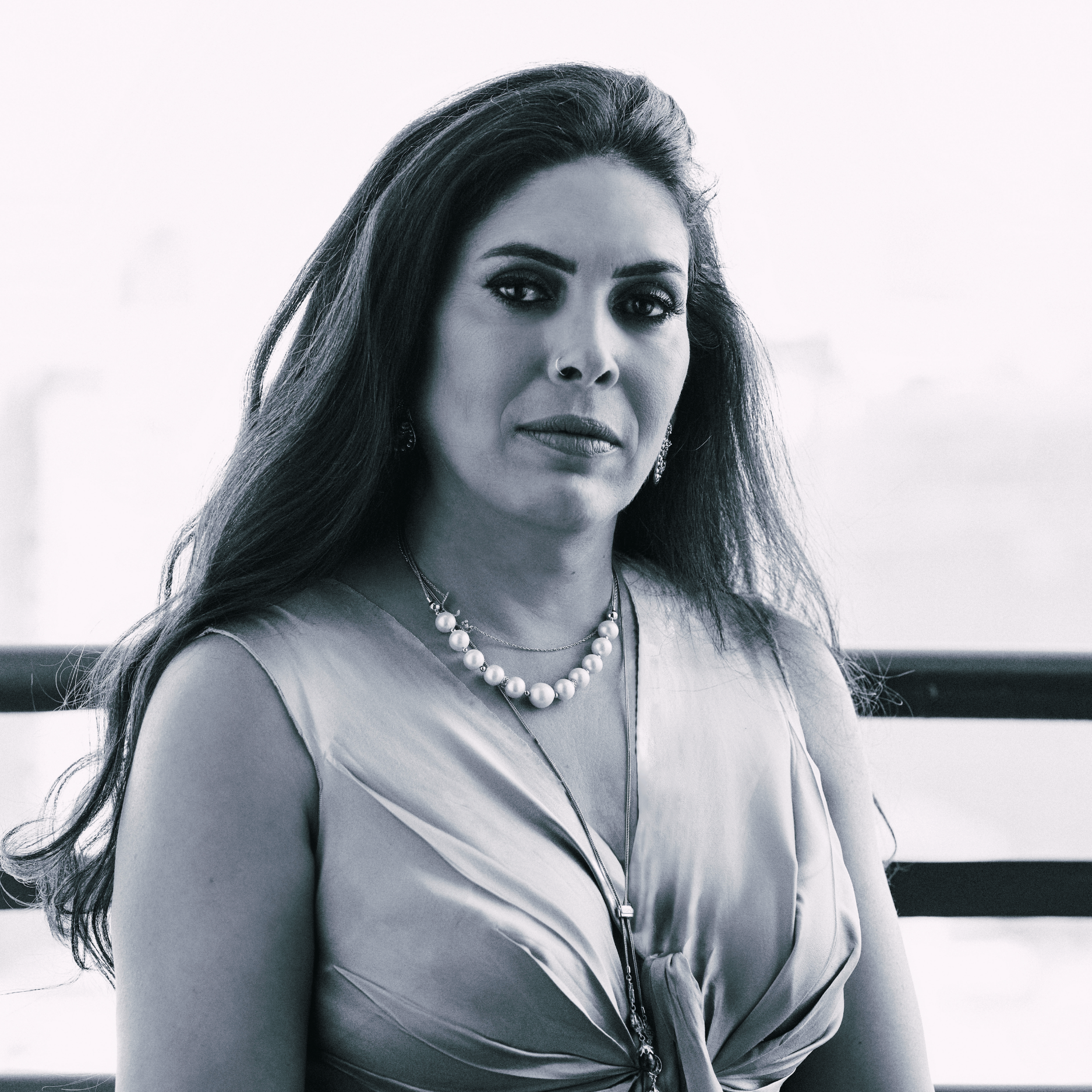
Jewelry traditions are rooted in artistry and history. The most visionary, however, aim to do more – they revive ancient techniques, educate new artisans, and preserve cultural stories. At Azza Fahmy Jewellery, this vision comes to life through craft and community.
Azza Fahmy’s journey began in 1969 as the first female apprentice in Cairo’s centuries-old Khan El Khalili market, leading her to found what would become an internationally renowned jewelry design company. Today, under her daughter Fatma Ghaly’s leadership, the business applies ancient artistry to create modern masterpieces that remain true to their cultural past. Yet behind this success lies a deeper passion: education, heritage, and preserving a nearly forgotten craft.
Q: How did your family business begin?
My mother, Azza Fahmy, began her business journey in 1969, when a passion for creating jewelry was ignited after she discovered a German book about medieval designs. Determined to pursue this craft, but knowing there was no formal training in jewelry-making available in Cairo at the time, she became the first female apprentice in Khan El Khalili, Egypt’s ancient jewelry market, training with a master jeweler during the evenings while continuing to work her day job.
A few years later, during the 1970s, my mother was awarded a scholarship from the British Council and left Egypt to complete her education in jewelry craft at London Polytechnic. Upon returning home, she launched the business in earnest, making rings, selling them, and reinvesting everything back into her business. The company grew, and in a short time, my mother realized she needed an artisan to assist with the craftsmanship – until then, she had designed, made, and sold every piece herself. The company organically expanded from there.
When I joined the business in the early 2000s, my mother was very much running it like an entrepreneur. However, I saw that her time was being consumed by accounting, finance, and other operational tasks, pulling her away from her true strength: designing exquisite jewelry. My goal was to restructure the business so she could focus on design, while also allowing the company to pursue new opportunities without compromising our core work. A few years later, my sister Amina, who had studied jewelry design in Italy and the UK, joined the business. She launched her first collection in 2006 and continues to shape our brand’s creative direction.
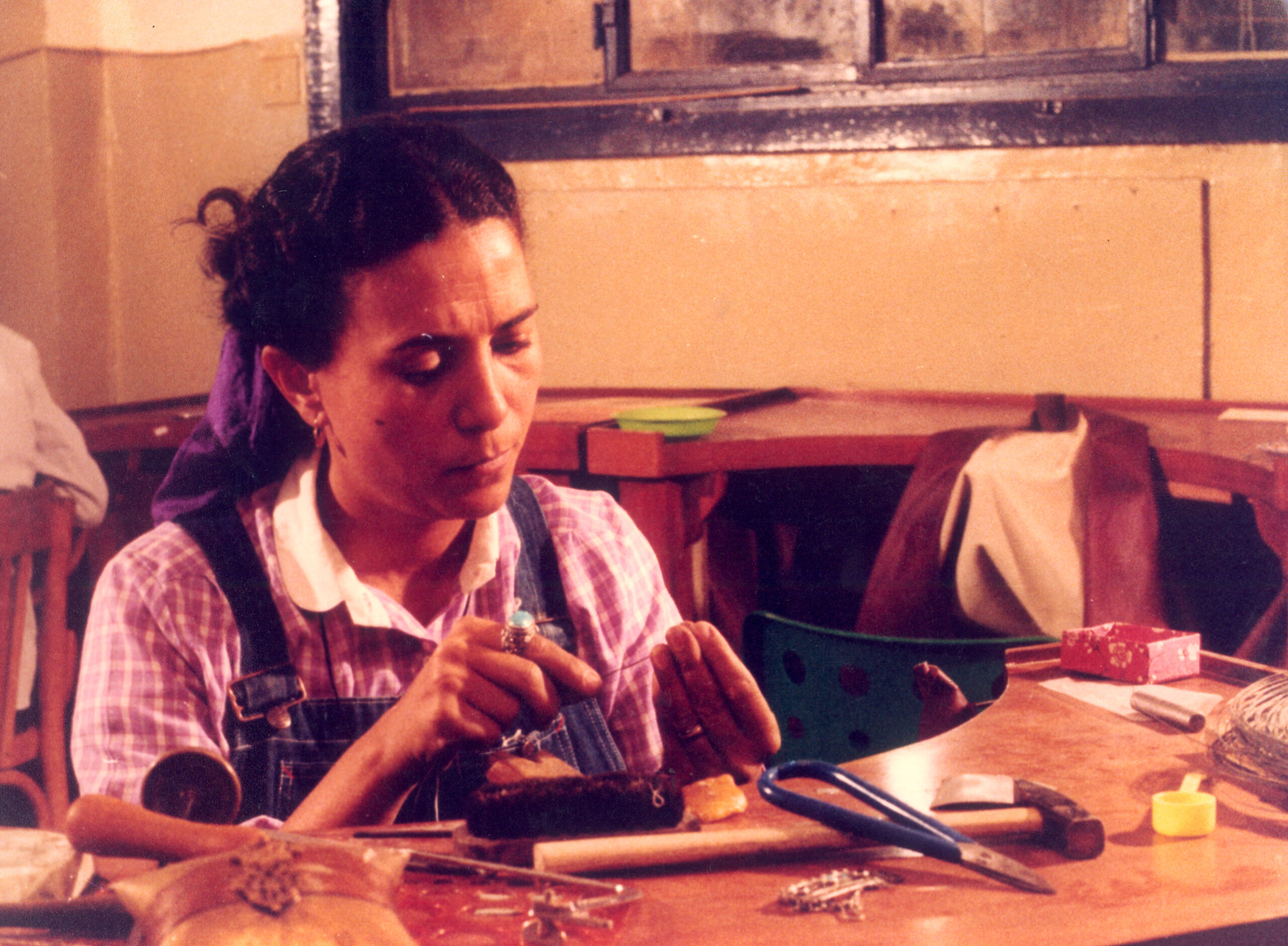
Azza Fahmy at work during her early years in jewelry making.
Source: Azza Fahmy Jewellery
Q: Your mother has documented her artistic and entrepreneurial journey in two autobiographical books. What inspired her to write these books?
My mother has a gift for research and a love of documenting the history of civilizations, cultures, and crafts. She is also an impassioned collector of traditional jewelry from Egypt and the wider region. Her wonderful curiosity drives her to uncover the socioeconomic reasons behind the jewelry, clothing, and styles from a certain period. For over 30 years, she meticulously recorded her findings, and eventually, she felt compelled to share the immense archive of knowledge she had amassed.
The artistic element of transmission is crucial for her and our family.
The conveyance of emotion, feeling, and intent is central to our craft, and documenting the context behind those elements throughout history is a huge motivation.
This commitment to preserving and conveying that heritage is what led my mother to continue writing. After publishing her first books, she realized there was more to document and share. She has since completed her third, with a fourth now in progress.
Q: How have those books shaped your understanding of the family’s business legacy and what impact have you seen the books have on the wider community?
As my sister and I have been around the business since its inception, I was already familiar with much of the company’s legacy. However, the books have allowed me to see more clearly how my mother’s journey and message have had a profound impact on others. Recently, I was with her when we were approached by several women who had just finished reading her autobiography. They were overwhelmed by her story and the inspiration it provided them. Witnessing this firsthand was deeply gratifying.
At Azza Fahmy Jewellry, we’ve incorporated my mother’s books into our onboarding process for new team members because they can truly change someone’s perception of the brand. Moreover, her entrepreneurial journey resonates with aspiring business owners or those facing challenges in their existing ventures. It emphasizes a powerful idea: anyone can work toward their dreams, regardless of the confines of their current reality.
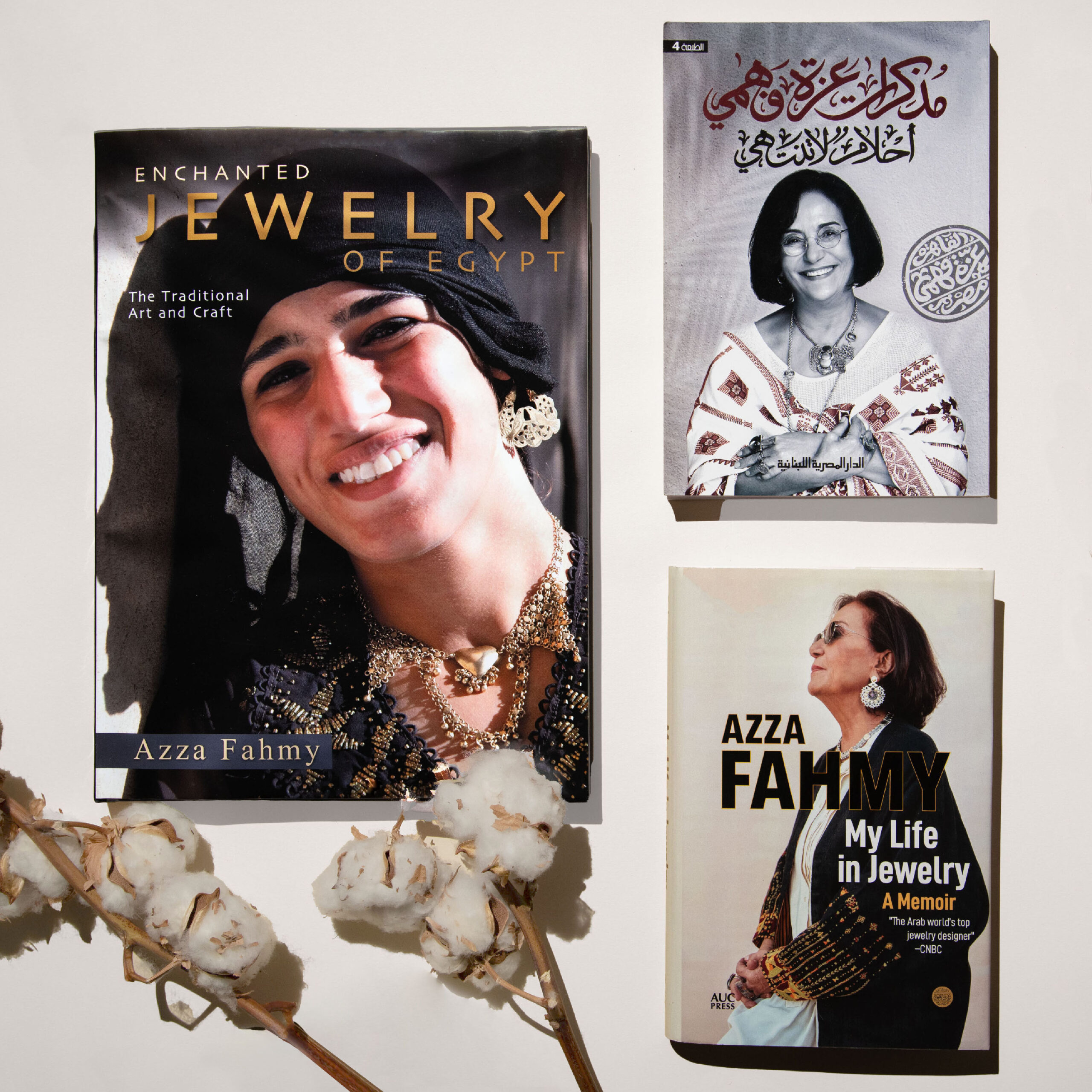
A selection of books by Azza Fahmy.
Source: Azza Fahmy Jewellery
Q: Your family has not only committed to preserving its business legacy, but also to sustaining the tradition of regional craftsmanship. In 2012 your family established the Azza Fahmy Foundation to protect and preserve traditional Egyptian handicrafts followed by the establishment of the Design Studio by Azza Fahmy. What inspired you to establish the foundation and the school?
The inspiration for the school and the foundation came from a core belief that for an industry or a craft to thrive, educating and onboarding talented, knowledgeable individuals is crucial. When my mother wanted to learn jewelry-making, no resources existed in Cairo – and 30 years later, my sister faced the same challenge; she had to travel to Europe for her training. Not everyone can afford to travel abroad to learn the craft. Moreover, to thrive as a jewelry design and creation business, having accessibility to a pool of talent in the region is far more practical and sustainable than bringing in talent from abroad. To build a local ecosystem, we started a school in Cairo in 2013 to educate designers. Today, it also provides professional vocational training.
Many of the traditional filigree and dye techniques we teach are being replaced with modern practices, so preserving these skills and their heritage is extremely important to us.
Luckily, we’re fortunate to have some of the most accomplished filigree masters in the world keeping these traditions alive. Of course, there is a business aspect to consider when running a company, even one focused on artistry. We quickly realized that many designers lacked essential business skills, so to address this, we partnered with the American University in Cairo (AUC) School of Continuing Education to also teach them business management.
Q: What does it mean to you to be the steward of your family legacy in your role as CEO? And how do you and your sister work together to sustain and pass that legacy on to family, employees, and the entire region?
I find it very exciting. I’m also fueled by the collaborative nature of our work. It feels wonderful to promote my mother’s vision, but also very rewarding to contribute my own, alongside my sister’s. Together, we’ve aligned our ambitions to create an amazing experience.
One of the challenges in a family business for the second or third generation is taking ownership of a legacy that someone else began. There is often resistance to change. However, my mother has always been incredibly supportive of the business evolving with the contributions made by my sister and me. It’s not easy for a founder to embrace change, but ultimately, this evolution allows my mother’s vision to grow in directions that she may never have imagined.
From left to right: Fatma Ghaly, CEO; Azza Fahmy, Founder;
and Amina Ghaly, Head Designer of Azza Fahmy Jewellery.
Source: Azza Fahmy Jewellery
Q: Do you have any advice for other families seeking to preserve their legacy or hoping to protect their heritage or culture?
Legacy should not be confined to the past. It’s a living, fluid element that can continue to be built upon. Whether multi-dimensional or multi-generational, a legacy can resemble a set of building blocks, with each new activity adding another piece. There are many ways to capture and preserve a family’s legacy, whether through books and research, the passing down of traditions and knowledge, or through new initiatives that reflect its values. Everything a family values can add to its legacy, regardless of what industry it operates in, and there are countless creative ways to preserve, express, and build upon that legacy.
Building something that thrives and grows beyond the planted seed of an idea is very powerful. Genuine, authentic expression will always inspire and unite others.
Publication Date: 28-October-2026
The Interviewee
Fatma Ghaly, CEO, Azza Fahma Jewellery
Fatma is a business development specialist with over twenty five years of experience. Having learnt the rudiments of the family owned enterprise at a very early age, Fatma’s vision for the brand has seen her strategically develop the Azza Fahmy business, from a home-grown brand to an international luxury designhouse, employing over 400 people. A visionary leader, Fatma has driven the brand’s growth and success through expansion and cross-cultural collaborative projects and has enhanced values in local, regional and international markets. Fatma has also been integral to the development of The Design Studio (DSAF) set up by her mother in 2013; independently funded, the Cairo-based educational training hub for aspiring jewellery designers & students offers comprehensive curriculum-based courses.